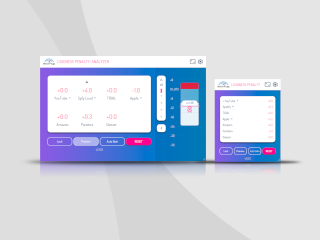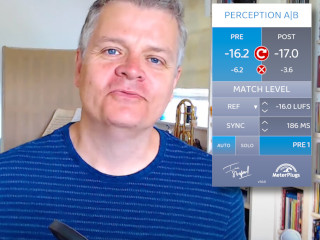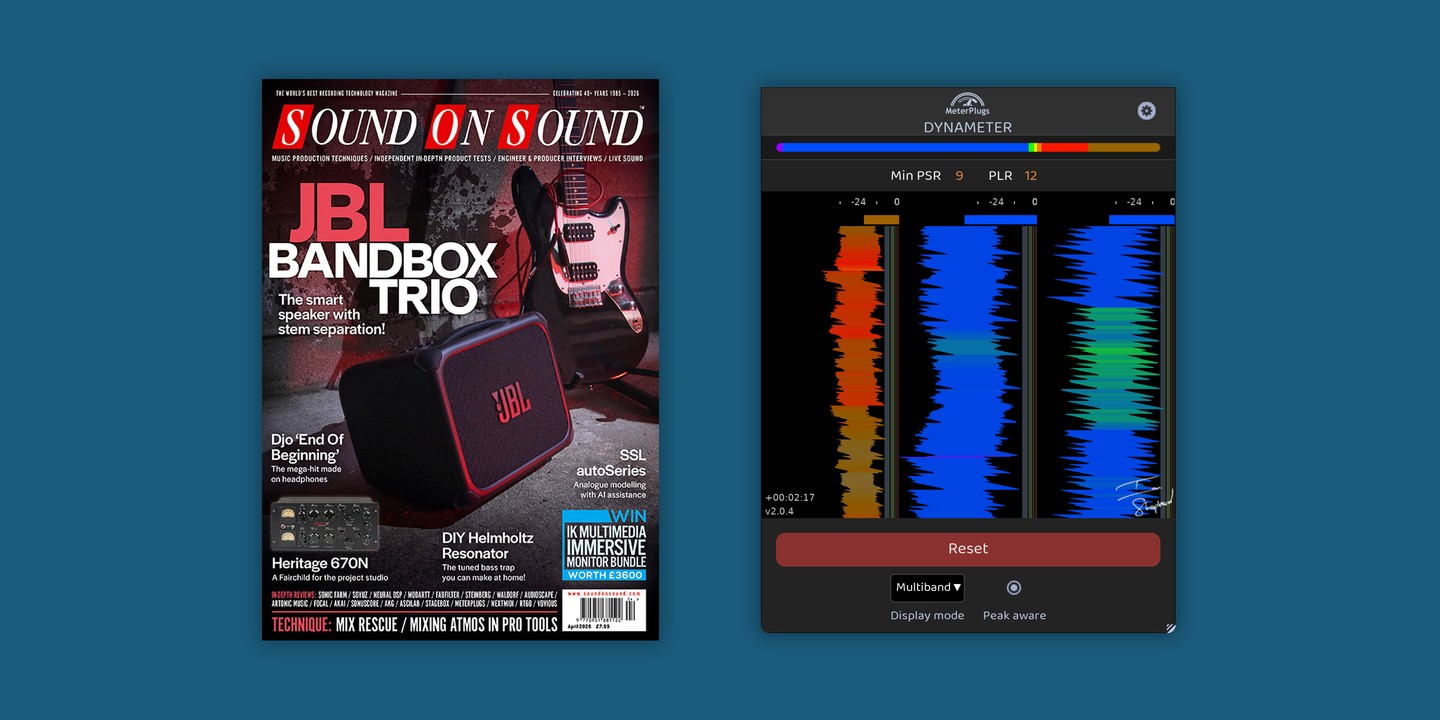
Dynameter 2 has been reviewed in the April 2026 issue of Sound On Sound by Matt Houghton. We’re pleased to share some highlights from the review.
The Verdict
Matt’s conclusion is encouraging:
“this is a very worthwhile update to Dynameter, and while there remains a tiny bit of room for improvement that’s mostly just wish-list stuff… Dynameter 2 already works very well indeed. So I have zero hesitation in recommending that existing users upgrade.”
He also notes that his own experience lined up well with the PSR methodology:
“Encouragingly, all my own tracks that I felt already sounded spot-on measured well!”
That’s a good sign - it means Dynameter isn’t second-guessing your ears. When your instincts are right, the meter confirms it.
PSR and “Potting the 8”
One of the things the review explores is the PSR (Peak to Short-term Loudness Ratio) methodology that Dynameter is built on. PSR measures the gap between your peaks and your short-term loudness - in other words, the density and dynamics of your audio, moment by moment.
Ian Shepherd’s suggestion is that the loudest sections of tracks in any genre, after mastering, should have a minimum PSR of around 8. Matt found this to be a reliable guide:
“‘potting the 8’ always seems to guide me toward good, impactful results.”
(“Potting” refers to setting a potentiometer - in this case, aiming for a PSR target of 8.)
Of course, 8 isn’t a rule. You could choose a different number and Dynameter would still help you mix and master consistently - it has presets to assist with that. But as a starting point for music with punch and impact, it’s a solid reference.
What the New Modes Reveal
Dynameter 2 introduced three new display modes alongside the original Classic view: Stereo, Mid/Side, and Multiband. Matt found practical uses for each.
In Mid/Side mode, he could quickly identify where a track’s sense of dynamics might be lost on mono playback - useful for checking how your music translates to single-speaker systems like phones and smart speakers.
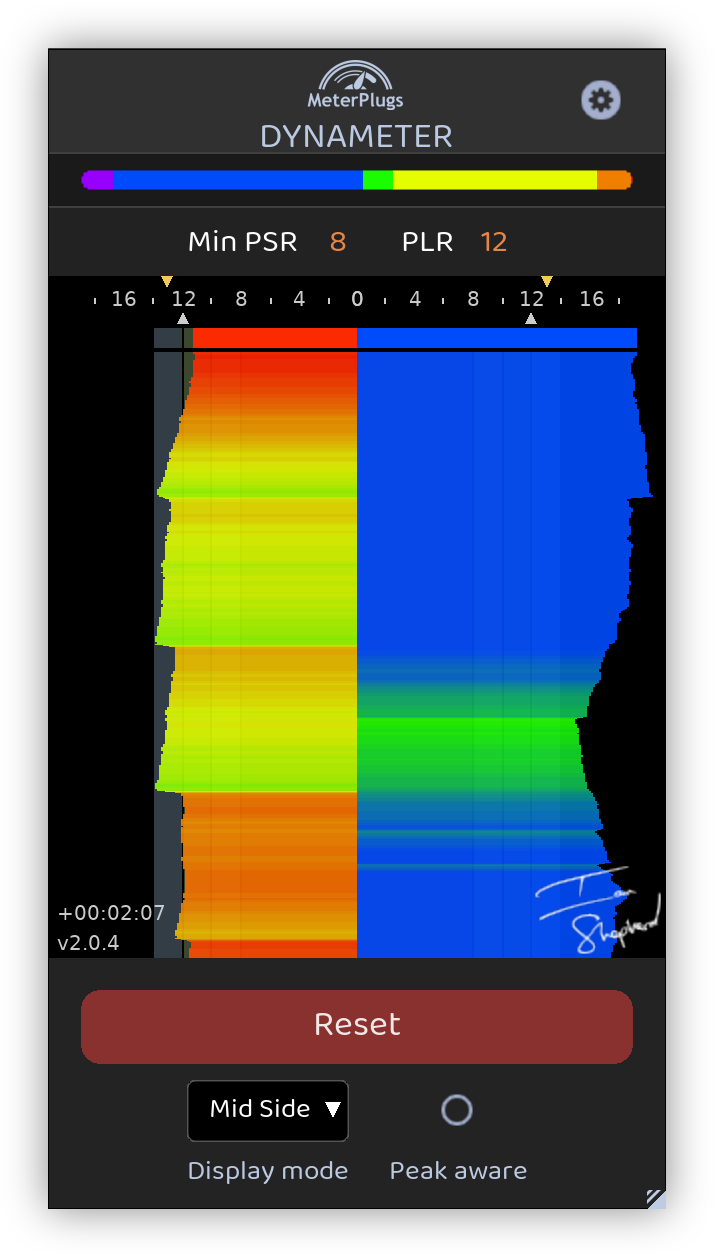
Mid/Side mode: the mid and side channels displayed separately, making it easy to spot where dynamics differ between the two.
Multiband mode breaks the signal into three frequency bands. Combined with the new Peak Aware function, it helped him decipher whether high-density sections were caused by peak limiting or by something inherent in the mix, like a sustained organ note or a pad:
“when you zoom in on a red/brown region with Peak Aware engaged, dense sections with peaks below your limiter threshold are typically not things you’ll need to worry about.”
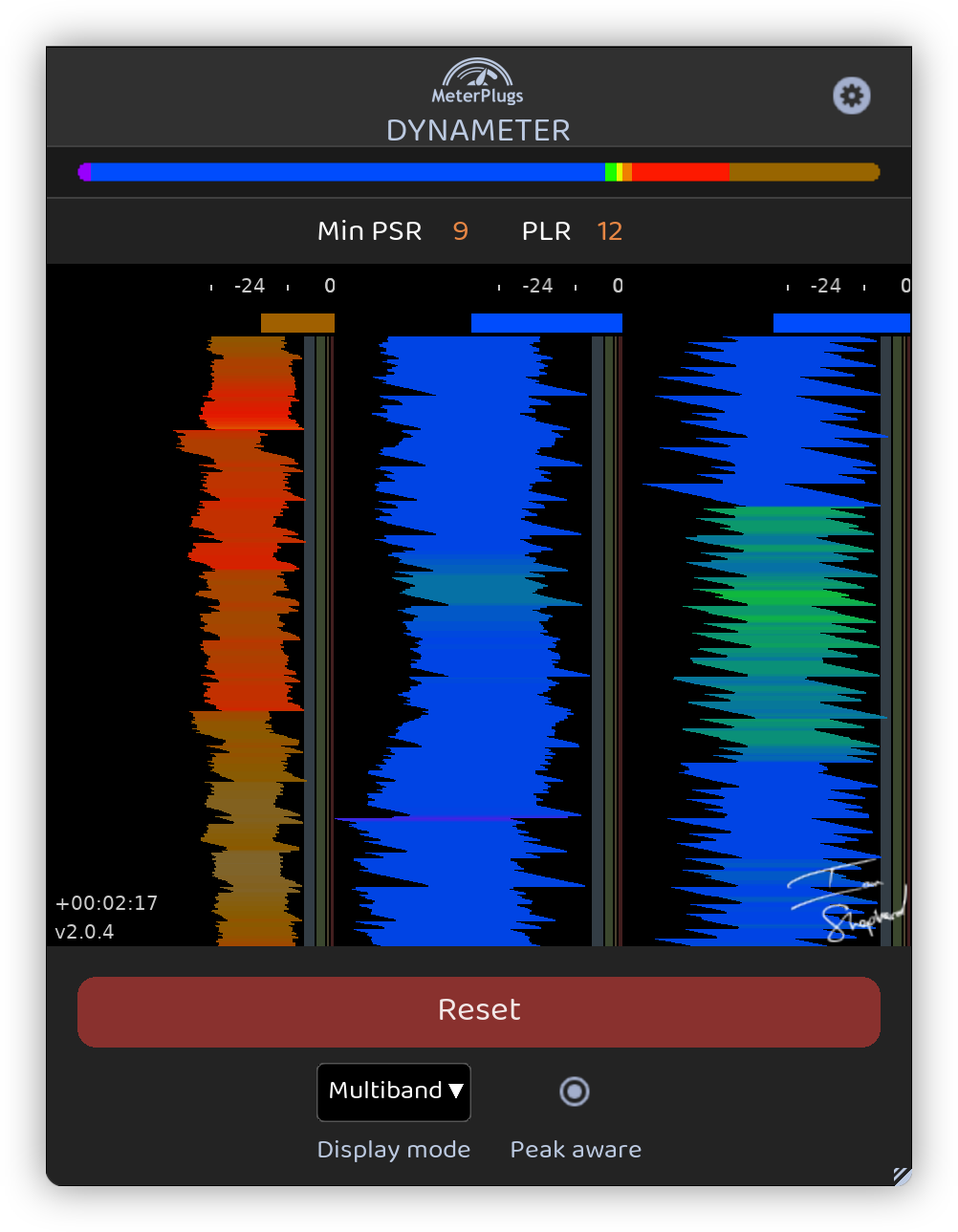
Multiband mode with Peak Aware: the low band (left) shows dense, red/brown dynamics - but the peaks aren’t hitting the ceiling. This density is inherent in the material, not caused by limiting.
This distinction matters. Not all density is a problem - sometimes it’s just the character of the music. Dynameter 2 helps you tell the difference.
How It Compares
The review also mentions alternatives on the market, noting that tools based on the older RMS crest factor approach are “oversensitive to bass” and “can’t match Dynameter 2’s more extensive functionality.” PSR’s use of ITU-R BS.1770-3 short-term loudness instead of RMS gives it a more reliable picture of perceived dynamics.
Read the Full Review
You can read Matt Houghton’s full review on the Sound On Sound website.
And if you’d like to try Dynameter 2 for yourself, click here.